Pengelly Garden Centre
Filbert (Corylus) Cosford
Filbert (Corylus) Cosford
Couldn't load pickup availability
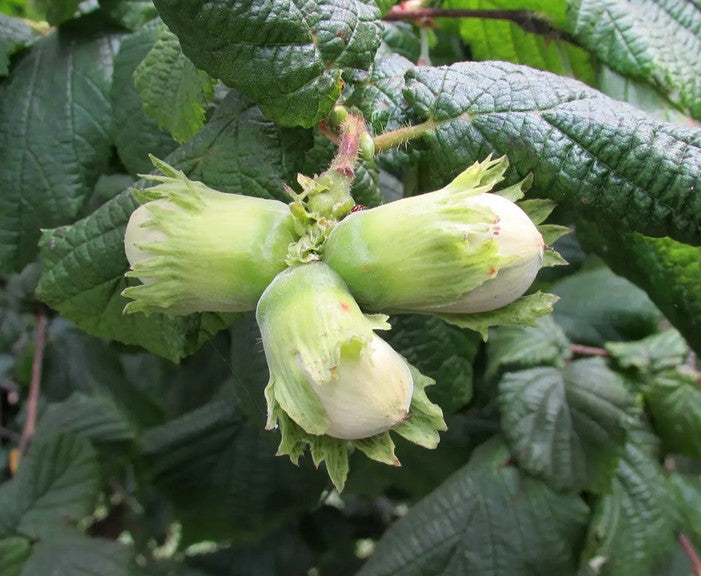
Cosford is one of the oldest and most dependable English cobnuts. It has been grown in British gardens since it was raised near Ipswich in Suffolk in 1816. The nuts are large and oblong, with unusually thin shells that make them easy to crack, and inside is a sweet, nutty kernel with an excellent flavour. Pick them from late September. Enjoy them fresh and milky straight from the tree, or let them ripen fully for roasting, baking and storing through to the new year. In late winter the bare branches are hung with bright yellow catkins, which bring welcome early colour and an important early source of pollen for bees.
Cosford grows as a vigorous, upright, multi-stemmed shrub, reaching around 2.5–4m tall and wide if left unpruned. It is fully hardy and easy-going, and it grows well in a wide range of soils, including chalk and clay, in full sun or light shade. The heaviest crops come in a sunny, sheltered spot. For the best nut harvests, train it as an open, goblet-shaped bush and keep the ground clear of weeds and grass around the base. In August, snap the long side-shoots halfway along and leave them hanging, a traditional technique known as brutting. Then shorten these shoots to three or four buds in late winter, while the catkins are shedding pollen. The prunings make excellent pea sticks and bean poles. Cosford also makes a productive, attractive informal hedge.
Cosford is one of the best pollinators of all hazels and is partially self-fertile. Crops are heavier with another cobnut or filbert nearby, such as Kentish Cob or Hall's Giant, and even native hedgerow hazel will help.
Each plant is hand-selected before dispatch.
Available from Pengelly Garden Centre.
Share