Pengelly Garden Centre
Apple (Malus) Dabinett (Cider) — Half-Standard, 12L Container, MM106
Apple (Malus) Dabinett (Cider) — Half-Standard, 12L Container, MM106
Couldn't load pickup availability
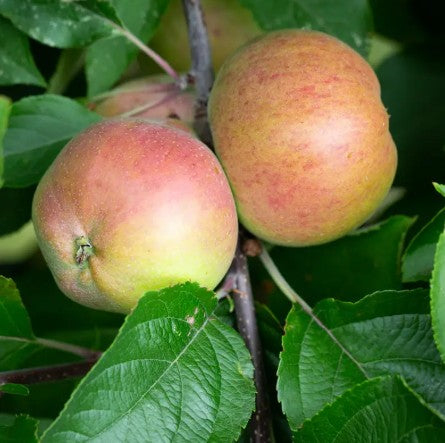
Dabinett is the backbone of West Country cider-making and one of the most widely planted cider apples in Britain. In the early 1900s William Dabinett found it growing as a chance seedling in a hedge at Middle Lambrook, near South Petherton in Somerset. It is thought to be a descendant of the old Somerset variety Chisel Jersey. The small, aromatic, yellow-green apples are flecked with red and produce a classic bittersweet juice that is rich in fruity tannins and low in acid. The juice is fine enough to make a single-variety cider in its own right, and it also adds body and depth to a blend. Like all true cider apples, the fruit is far too astringent to eat fresh. It is grown for pressing.
This half-standard tree has a clear stem beneath the crown, giving it the look of a traditional orchard tree. It is grafted onto the semi-vigorous MM106 rootstock. Dabinett is naturally a small, spreading, low-vigour variety, so on MM106 it makes a manageable tree of around 3–3.5m. That suits a medium-sized garden, a paddock or a small cider orchard. Plant in full sun in any reasonably well-drained soil with a little shelter, and stake securely for the first few years while the roots establish. It is a spur-bearer that crops reliably and heavily, sometimes setting more fruit than it can carry. Thinning the fruitlets in early summer helps keep the apples a good size. The fruit is ready to harvest in November and should be pressed within a week or two of picking.
Dabinett is self-fertile, so a single tree will crop on its own. That makes it an excellent choice if you only have room for one cider apple. It flowers late, so the blossom usually escapes spring frosts, and it has good natural resistance to scab and canker.
Each tree is hand-selected before dispatch.
Available from Pengelly Garden Centre.
Share