Pengelly Garden Centre
Apple (Malus) Charles Ross — Bush, 12L Container, MM106
Apple (Malus) Charles Ross — Bush, 12L Container, MM106
Couldn't load pickup availability
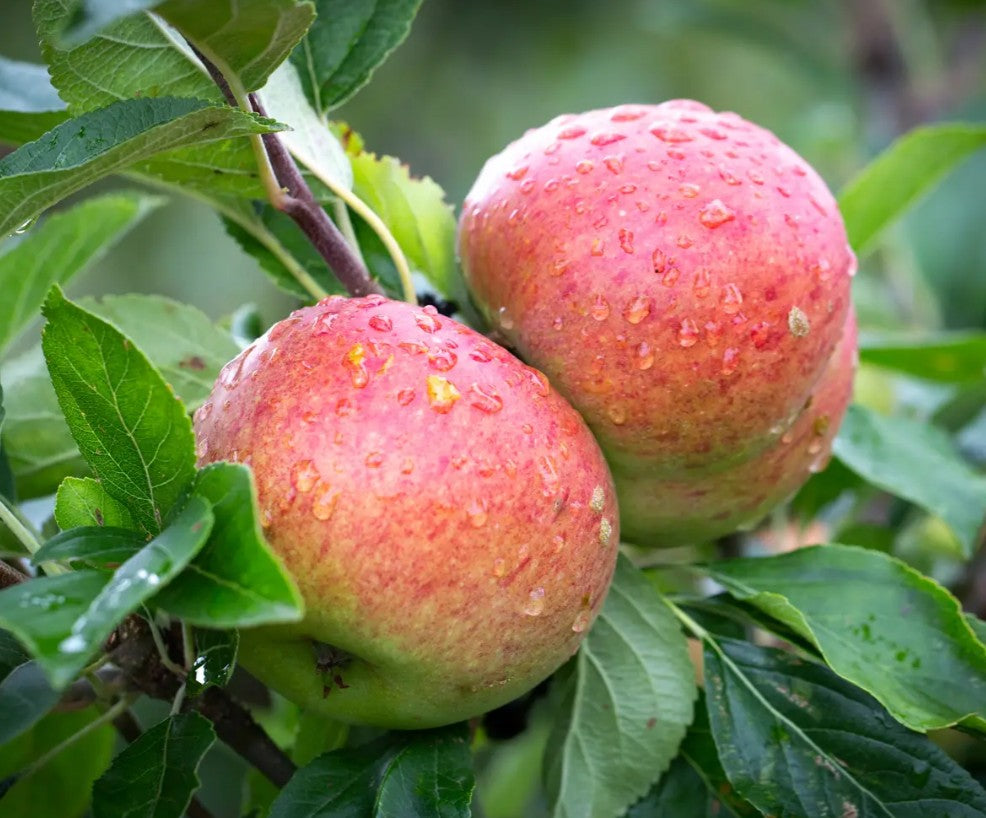
Charles Ross is a handsome Victorian dual-purpose apple and one of the most reliable varieties you can grow. It was raised around 1890 by Charles Ross, head gardener at Welford Park near Newbury in Berkshire, by crossing the old cooker Peasgood's Nonsuch with Cox's Orange Pippin. It was first shown as 'Thomas Andrew Knight' before being renamed in honour of its raiser in 1899, and it now holds the RHS Award of Garden Merit. The large, round fruits look like an oversized Cox, with yellow-green skin that is flushed and striped with orange-red. Early in the season the flesh is quite sharp, which makes it a useful cooker. It sweetens in store into a juicy dessert apple with a hint of Cox's aromatic flavour. Pick the fruit from mid-September and store it somewhere cool to use through to December. Its looks also make it a favourite for show benches.
This bush tree has a short trunk and an open, branching crown. It is grafted onto the semi-vigorous MM106 rootstock and typically reaches 3–4m tall and wide at maturity, though regular winter pruning will keep it smaller. It suits a medium-sized garden or a small orchard. Plant in full sun in well-drained soil and allow around 3.5m between trees. Charles Ross is unusually happy on neutral to chalky soils where many apples struggle, and it copes well with exposed, windy sites. Stake securely for the first few years while the roots establish, and water well during dry spells in the first couple of summers. It is a partial tip-bearer that carries some fruit at the ends of the previous year's shoots, so leave some of the shorter shoots unshortened when winter pruning.
Charles Ross crops reliably year after year. It has good resistance to scab, and its blossom stands up well to late frosts. It is partially self-fertile, so a single tree will give some fruit, but crops are much heavier with a partner nearby from pollination groups 2, 3 or 4, such as Discovery or James Grieve.
Each tree is hand-selected before dispatch.
Share